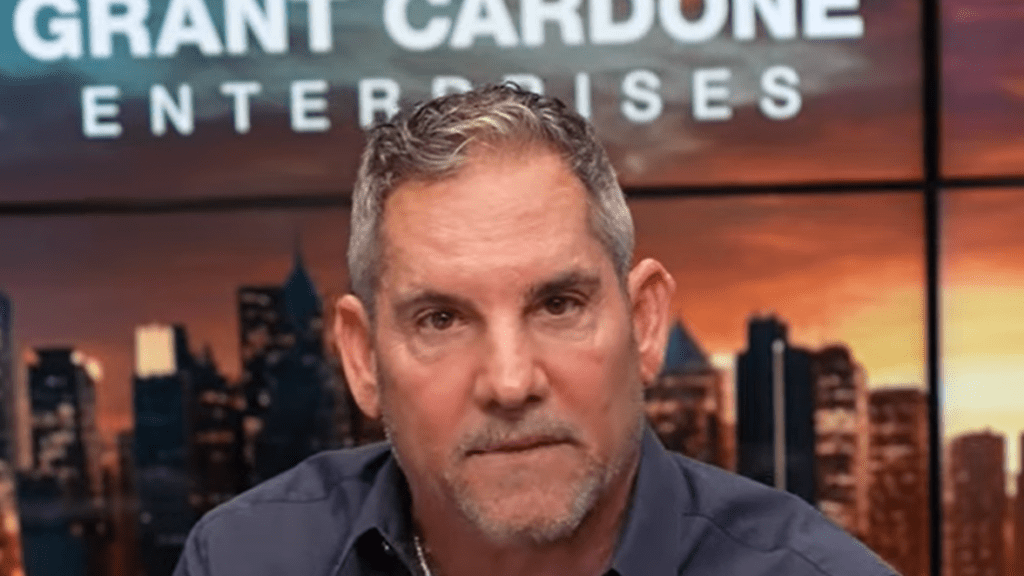
Grant Cardone: The Rebel of Real Estate
In the world of real estate, few figures are as polarizing as Grant Cardone. With a staggering net worth of $4 billion, Cardone has made a name for himself as a savvy investor and entrepreneur. Yet, in a move that defies conventional wisdom, he chooses to rent rather than own the roof over his head. To Cardone, homeownership is not the American dream; it’s a financial prison.
A Contrarian Perspective on Homeownership
In a candid interview with DJ Vlad in 2019, Cardone articulated his belief that homeownership is a poor choice for real estate investors. He likens houses to hospitals: “You get in, you get out.” This analogy underscores his view that a home should not be seen as a long-term investment but rather a temporary shelter. Cardone’s perspective flips the traditional narrative that renting is akin to throwing money away. He argues that renting can often be a smarter financial decision, especially for those looking to build wealth through investments.
The Math Behind Renting
Cardone’s disdain for homeownership is rooted in simple mathematics. He challenges the common belief that renting means paying someone else’s mortgage. “You could live in a house for 15 years with a 30-year mortgage and still owe what the house was worth when you bought it – or worse,” he explains. For Cardone, the question is straightforward: “If it doesn’t pay you, why are you doing it?” This pragmatic approach to real estate emphasizes the importance of cash flow over the emotional attachment many have to homeownership.
The Future of Ownership
Looking ahead, Cardone predicts a shift in societal norms regarding ownership. “We’re moving into an environment where people are gonna own nothing,” he states. This vision aligns with the growing trend of leasing over owning in various aspects of life, from clothing to vehicles. As society evolves, Cardone believes that the traditional notion of ownership will become increasingly obsolete.
Investing for Income, Not Ownership
While Cardone may not believe in owning a home, he is a staunch advocate for real estate as an investment vehicle. His strategy focuses on generating income rather than accumulating assets for the sake of ownership. “I need income. I want income every month,” he asserts. This philosophy drives him to invest in income-generating properties rather than purchasing a personal residence.
Cardone’s approach is clear: “You want enough passive income coming in that you can buy dumb stuff.” He emphasizes that wealth should work for you, rather than the other way around. Relying on earned income to fund luxuries is, in his view, a recipe for financial disaster. Instead, he encourages individuals to build passive income streams before indulging in extravagant purchases.
The Mechanics of Renting
Interestingly, Cardone’s choice to rent is not merely a philosophical stance; it also has practical implications. He has mentioned that he rents his home to benefit from better interest rates on loans, suggesting that his company, Cardone Capital, likely owns the property while he pays rent. This arrangement allows him to leverage financial instruments to maximize his wealth while maintaining flexibility in his living situation.
Conclusion: Redefining Success
In a society that often equates homeownership with success, Grant Cardone stands as a testament to the idea that financial freedom can take many forms. For him, the key to wealth lies not in what you own but in how your money works for you. By challenging the status quo and advocating for a rental lifestyle, Cardone invites us to rethink our definitions of success and financial security.
As the landscape of real estate continues to evolve, Cardone’s insights serve as a reminder that there is no one-size-fits-all approach to wealth building. Whether you choose to rent or own, the ultimate goal should be to create a life where your money works for you, allowing you to enjoy the fruits of your labor without the burdens of traditional ownership.